
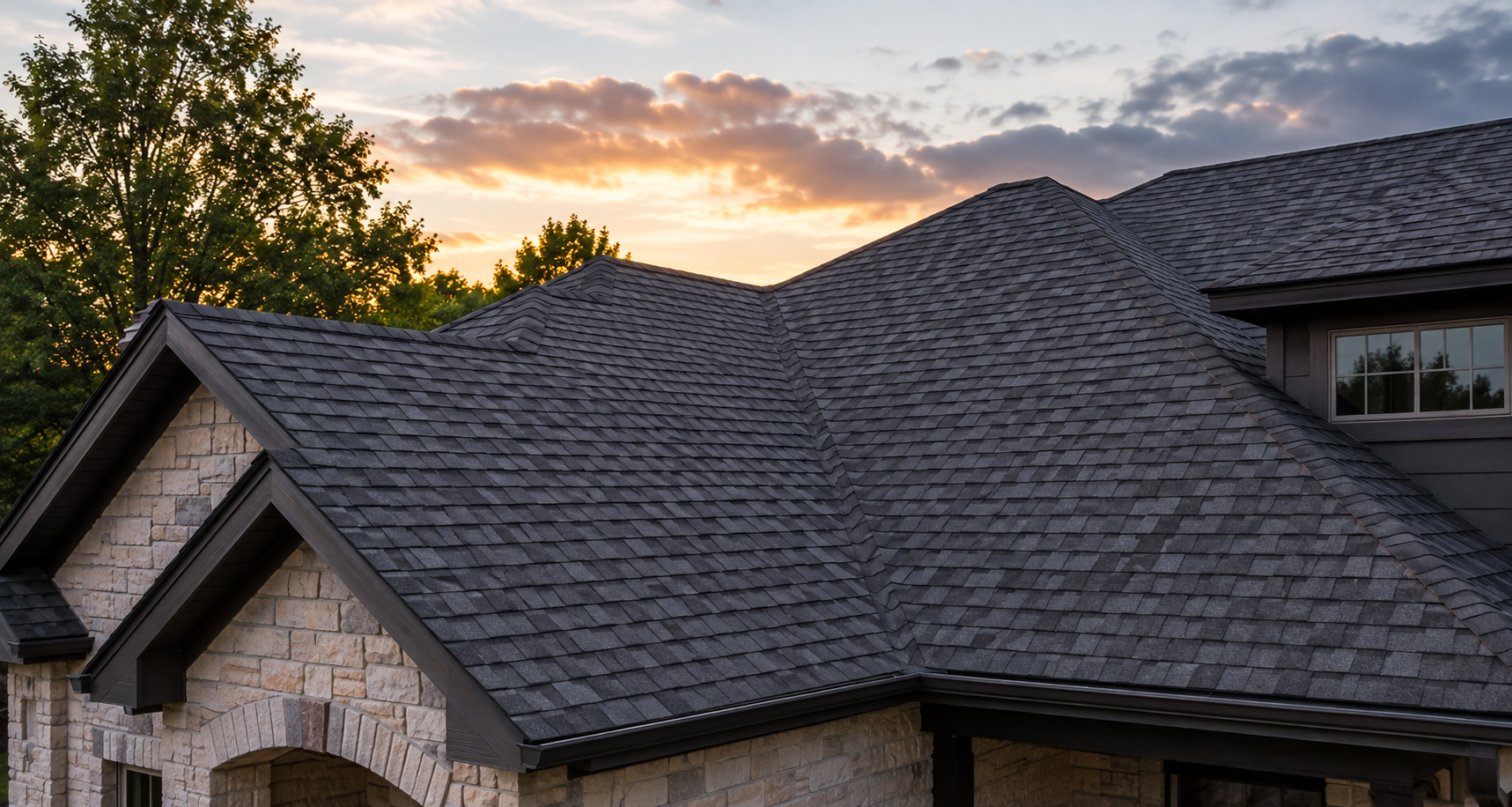
Shingle Roofing in South Florida: What Homeowners Need to Know
Asphalt shingles remain one of the most popular roofing choices for South Florida homeowners — and it's easy to understand why.
Today's architectural shingles offer an attractive combination of affordability, curb appeal, color options, and proven performance. For homeowners who want a quality roof without the higher upfront investment associated with tile or standing seam metal, shingles can provide excellent value.
However, roofing in South Florida is different from roofing in many other parts of the country. Intense sunshine, high temperatures, heavy rain, tropical storms, and hurricane-force winds place significant demands on a roofing system.
If you're considering a shingle roof replacement in Stuart, Palm City, Hobe Sound, Port St. Lucie, or elsewhere on the Treasure Coast, here's what you should know.
What Are Architectural Shingles?
When people hear "asphalt shingles," they sometimes picture the thin, flat three-tab shingles commonly installed decades ago.
Modern architectural shingles, also called dimensional or laminated shingles, are different.
They're manufactured using multiple layers that create greater dimension and a more substantial appearance. Instead of the repetitive flat pattern of traditional three-tab shingles, architectural shingles create varied shadow lines that can give a roof greater depth and character.
They're also available in a wide range of colors, making it easier to coordinate your roof with your home's exterior, trim, shutters, stonework, and landscaping.
For most South Florida homeowners considering a new shingle roof today, architectural shingles are the natural starting point.
Why Are Shingle Roofs So Popular in South Florida?
The biggest advantage of shingle roofing is value.
A properly installed architectural shingle roof can provide homeowners with an attractive and dependable roofing system at a substantially lower initial investment than many tile or standing seam metal systems.
Other advantages include:
Wide variety of colors and styles
Attractive architectural appearance
Lower upfront cost than tile or standing seam metal
Relatively straightforward repairs
Proven roofing technology
Availability from major manufacturers
Good wind performance when installed as an approved system
Compatibility with many South Florida home styles
Shingles are particularly attractive for homeowners who want to balance performance, appearance, and budget.
Not All Shingles Are the Same
One of the biggest mistakes homeowners can make when comparing roofing proposals is assuming every architectural shingle is essentially the same.
They're not.
Manufacturers offer different product lines with varying specifications, wind ratings, warranties, algae-resistance technologies, colors, dimensions, and appearance.
There are also differences between standard architectural shingles and heavier premium or designer shingles.
When comparing products, homeowners should consider more than the color.
Ask about:
Manufacturer
Specific shingle product
Wind rating
Algae resistance
Manufacturer warranty
Color availability
Hip and ridge shingles
Starter shingles
Underlayment
Ventilation
Complete roofing system
The shingle is only one component of your roof.
What's Under a Shingle Roof?
This is one of the most important things for homeowners to understand.
When you look at a finished roof from the street, you see shingles.
But underneath those shingles is an entire roofing system.
A typical South Florida shingle roofing assembly includes several important components.
Roof Deck
The roof deck provides the structural foundation for your roofing system.
Depending on the home, this is commonly plywood or another approved structural decking material.
During a roof replacement, the existing roof covering is removed so the roof deck can be evaluated. Damaged or deteriorated wood should be identified and properly replaced before the new roofing system is installed.
Underlayment
Underlayment provides an additional protective layer between your shingles and roof deck.
Modern South Florida roofing systems may utilize self-adhered underlayments or other approved assemblies depending on the project and applicable requirements.
This layer is particularly important because shingles are designed primarily to shed water.
If wind-driven rain gets underneath the shingles during a severe storm, the secondary water-resistant layer underneath them can provide additional protection for the home.
Starter Shingles
Starter shingles are installed along designated roof edges before the main field shingles.
They're an important part of the system because they help secure the first course of shingles and provide the necessary adhesive protection at vulnerable roof edges.
Architectural Shingles
The primary shingles are then installed across the roof according to the manufacturer's requirements and applicable product approvals.
Hip and Ridge Shingles
Specialized shingles are installed along the hips and ridges of the roof.
These aren't simply decorative pieces. They protect some of the most exposed areas of the roofing system and should be installed according to the requirements of the specific roofing assembly.
Flashings
Flashing protects vulnerable areas where the roof meets another surface or is interrupted by a penetration.
These areas can include:
Valleys
Sidewalls
Headwalls
Chimneys
Skylights
Plumbing vents
Roof-to-wall transitions
Other penetrations
The quality of these details can have a major impact on the long-term performance of the roof.
How Do Shingle Roofs Perform in Hurricanes?
This is understandably one of the biggest concerns for South Florida homeowners.
Modern roofing products can provide strong wind performance when they're installed as part of an approved roofing assembly and according to the manufacturer's requirements.
But a shingle's advertised wind rating shouldn't be viewed in isolation.
The performance of a roof depends on the complete roofing system.
That includes:
Roof deck
Underlayment
Starter shingles
Shingle product
Fasteners
Fastening pattern
Hip and ridge installation
Flashing
Roof geometry
Installation quality
Fastener placement is especially important.
A high-quality shingle installed with improper nail placement isn't the same roofing system as that same product installed correctly.
This is why workmanship matters so much in South Florida.
Why Proper Nailing Matters
Shingle installation might look simple from the ground, but there are precise requirements governing where and how shingles should be fastened.
Nails placed too high, too low, at an angle, or driven too deeply can compromise the attachment of the shingle.
Similarly, nails that aren't driven far enough can interfere with the way the next course of shingles lays.
The number and placement of fasteners must correspond with the requirements of the particular roofing system and applicable approvals.
When South Florida winds begin creating uplift pressure on a roof, these seemingly small installation details become extremely important.
What Is a Secondary Water Barrier?
Florida homeowners may hear contractors use terms such as secondary water barrier, self-adhered underlayment, or peel-and-stick underlayment.
Although specific roofing assemblies vary, the basic concept is simple:
There is another protective layer underneath your finished shingles.
A self-adhered roofing underlayment bonds to the roof deck and can provide an important additional line of defense against water intrusion.
This can be especially valuable during severe weather if shingles or other components of the finished roof covering become damaged.
When comparing roofing proposals, don't look only at the shingle manufacturer.
Ask what is going underneath the shingles as well.
How Long Does a Shingle Roof Last in South Florida?
There's no single number that applies to every shingle roof.
The actual service life of a roofing system depends on numerous factors, including:
Quality of installation
Shingle product
Underlayment
Attic ventilation
Roof pitch
Sun exposure
Tree coverage
Storm history
Maintenance
Roof orientation
Previous repairs
Coastal exposure
South Florida's intense UV exposure and heat can be particularly demanding on asphalt roofing materials.
That's why homeowners should be cautious when interpreting manufacturer warranty periods as an exact prediction of how long a roof will remain in service.
A warranty term and the real-world service life of a roofing system aren't necessarily the same thing.
Why Do Shingles Develop Black Streaks?
Those dark streaks commonly seen on older Florida shingle roofs aren't always dirt.
They are often associated with algae growth.
South Florida's warm and humid climate provides an ideal environment for algae to develop on roofing surfaces.
Many modern architectural shingles incorporate algae-resistant technology designed to help reduce discoloration.
If appearance is particularly important to you, ask about the algae-resistance features and warranty offered with the shingles you're considering.
Can a Shingle Roof Be Repaired?
Yes.
One advantage of shingle roofing is that localized damage can often be repaired without replacing the entire roof.
Common shingle roof repairs may include:
Missing shingles
Wind-damaged shingles
Damaged flashing
Plumbing vent leaks
Roof-to-wall leaks
Valley problems
Localized storm damage
However, the age and overall condition of the roof need to be considered.
Repairing one isolated problem on a relatively healthy roof can make perfect sense.
Continually repairing leaks on an aging roofing system may not.
A professional inspection can help determine whether a roof repair or complete roof replacement represents the better long-term solution.
Are Shingles a Good Choice for Florida Heat?
Yes, but color, ventilation, insulation, and the overall roofing assembly matter.
South Florida roofs receive tremendous amounts of solar exposure throughout the year.
Darker roof colors generally absorb more solar energy than lighter colors, although roof color is only one factor affecting the temperature inside your home.
Attic ventilation and insulation also play important roles.
When selecting a shingle, consider appearance alongside the overall design and efficiency of your home.
What Color Shingle Should You Choose?
Your roof represents a significant portion of your home's visible exterior, so color can dramatically affect curb appeal.
Some of the most popular shingle colors tend to fall within:
Charcoal
Black
Weathered wood
Gray
Brown
Driftwood and neutral blends
For many South Florida homes with white, cream, beige, or light-colored stucco, darker charcoal and gray roofs can create a clean contrast.
Traditional homes may pair well with warmer brown and weathered tones.
Rather than choosing from a small sample alone, look at completed homes whenever possible. The appearance of a full roof can be dramatically different from a small shingle sample viewed indoors.
Shingles vs. Tile vs. Metal Roofing
Homeowners replacing a roof often ask which roofing material is best.
The better question is:
Which roofing system is best for your home, budget, and priorities?
Architectural Shingles
Shingles typically provide the lowest initial investment of these three options while still delivering excellent appearance and performance.
They're a particularly strong choice for homeowners who prioritize value.
Tile Roofing
Concrete and clay tile provide distinctive South Florida architecture, substantial curb appeal, and excellent material durability.
Tile generally requires a larger initial investment than shingles.
Standing Seam Metal
Standing seam metal provides clean architectural lines, concealed fastening options, exceptional durability, and premium long-term performance.
It also generally represents the highest initial investment of the three systems.
There isn't one universally correct choice.
A homeowner planning to move within several years may evaluate the options differently than someone building their forever home.
How Much Does a Shingle Roof Cost in South Florida?
The price of a shingle roof depends on much more than the square footage of the house.
Factors affecting cost can include:
Roof size
Roof pitch
Number of stories
Roof complexity
Number of valleys and penetrations
Existing roofing material
Condition of the roof deck
Shingle product selected
Underlayment system
Flashing requirements
Ventilation
Accessibility
Permitting
Required wood replacement
This is why online "price per square foot" estimates can sometimes be misleading.
Two homes with exactly the same living area can have dramatically different roof sizes and levels of complexity.
The best way to determine the cost is to have the actual roof evaluated and receive a detailed proposal.
What Should Be Included in a Shingle Roofing Proposal?
Don't compare roofing estimates based solely on the final price.
Compare the roofing systems being proposed.
A detailed shingle roofing proposal should clearly explain important components such as:
Shingle manufacturer
Specific shingle product
Shingle color
Underlayment system
Starter shingles
Hip and ridge shingles
Valley construction
Flashing details
Roof ventilation
Pipe and roof penetrations
Wood replacement
Manufacturer warranty
Workmanship warranty
Permitting
Property protection
Cleanup
This makes it much easier to understand why two roofing proposals may have different prices.
A less expensive proposal isn't necessarily a better value if important components of the roofing system are different.
Choosing a Shingle Roofing Contractor in South Florida
The quality of the materials matters.
But so does the person installing them.
Your roof is assembled on your home, piece by piece, by the roofing contractor and installation crew.
That's why homeowners should consider more than price when selecting a roofing company.
Look for a contractor with:
Experience in South Florida roofing
Proper licensing and insurance
A strong local reputation
Clear, detailed proposals
Established installation procedures
Quality roofing products
Strong workmanship standards
Good communication
Documented warranties
A history of standing behind their work
A roof is too important to your home to make the decision based solely on who provides the lowest number.
Shingle Roofing in Stuart and the Treasure Coast
At Heritage Roofing, we believe a good roof begins with helping homeowners understand exactly what they're buying.
We provide residential roofing services throughout Stuart, Palm City, Hobe Sound, Port St. Lucie, and surrounding Treasure Coast communities.
If you're considering replacing an aging shingle roof, we'll evaluate your existing roofing system, explain the available options, and help you determine which roof makes the most sense for your home and budget.
Whether that ultimately means architectural shingles, tile, or standing seam metal, our goal is the same:
Build a roofing system you can depend on and provide an experience that makes you confident you chose the right contractor.
Is It Time to Replace Your Shingle Roof?
If your roof is aging, showing signs of wear, or you're simply unsure how much life it has left, schedule a professional roof evaluation with Heritage Roofing.
We'll inspect your roof, explain what we find, and provide straightforward recommendations for your home.
No unnecessary pressure. No confusing roofing jargon. Just clear answers and quality workmanship.
Heritage Roofing — How Roofing Ought To Be.