
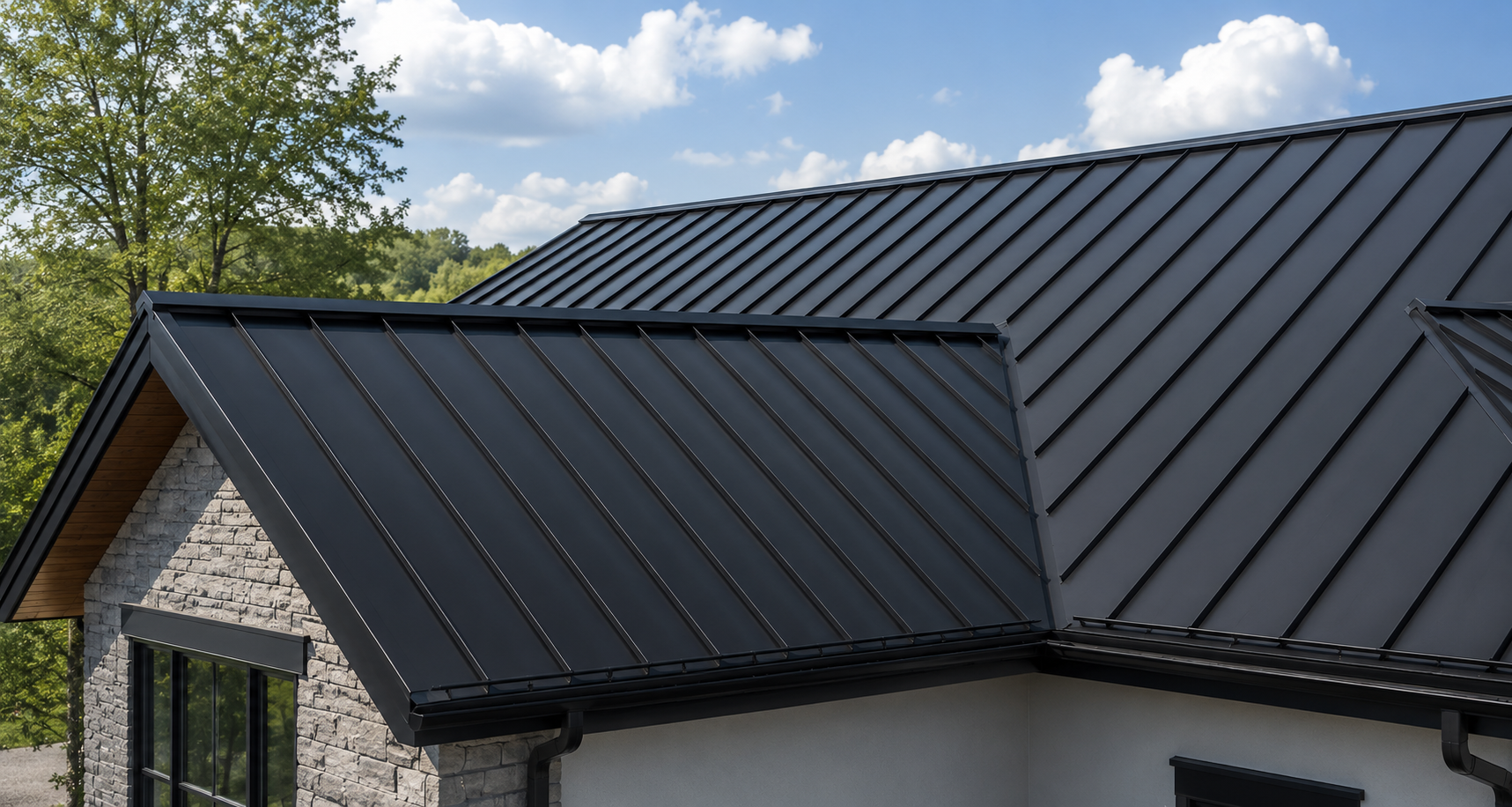
Metal Roofing in South Florida: What Homeowners Need to Know
Metal roofing has become one of the most sought-after roofing options for South Florida homeowners — and for good reason.
With its clean appearance, exceptional durability, and ability to perform in demanding coastal conditions, a properly installed metal roof can be an excellent long-term investment. From waterfront homes in Stuart and Hobe Sound to neighborhoods throughout Palm City, Port St. Lucie, and the Treasure Coast, metal roofing has become equally at home on traditional Florida houses and modern custom homes.
But not all metal roofs are the same.
If you're considering a metal roof replacement in South Florida, understanding the different systems, materials, installation methods, and costs can help you make a much better decision.
Why Is Metal Roofing So Popular in South Florida?
South Florida is one of the toughest environments in the country for a roofing system.
Our roofs are exposed to intense UV radiation, high temperatures, torrential rain, humidity, tropical storms, hurricane-force winds, and — particularly near the coast — salt-laden air.
Metal roofing is attractive to Florida homeowners because it combines several important benefits:
Excellent longevity
Strong wind performance when properly engineered and installed
Resistance to rot and insects
Excellent water shedding
Clean architectural appearance
Lower maintenance requirements
Numerous colors and profiles
Excellent long-term value
For homeowners planning to stay in their home for many years, these advantages can make the higher initial investment in metal roofing worthwhile.
What Is Standing Seam Metal Roofing?
When most homeowners picture a premium metal roof, they're usually thinking of standing seam metal roofing.
Standing seam roofs are constructed using long metal panels that typically extend from the lower edge of the roof toward the ridge. Raised vertical seams connect the panels together and create the distinctive lines that give standing seam roofing its appearance.
One of the biggest advantages of a true standing seam system is the way the panels are attached.
Instead of relying on exposed screws throughout the surface of the roof, many standing seam systems use concealed clips or concealed fastening systems beneath the panels.
The result is a cleaner appearance with fewer exposed penetrations through the finished roof surface.
Clip-Fastened vs. Nail-Strip Standing Seam Metal
Even within the standing seam category, there are different systems.
Two you'll commonly encounter are clip-fastened standing seam and nail-strip standing seam.
Clip-Fastened Standing Seam
A mechanically seamed or snap-lock standing seam system utilizing concealed clips is generally considered a premium metal roofing assembly.
Clips attach the panels to the roof deck while allowing the metal panels to accommodate some of the expansion and contraction that naturally occurs as metal heats and cools.
This movement is particularly relevant in South Florida, where roof temperatures can change significantly throughout the day.
Depending on the specific system and engineering requirements, clip systems can also provide excellent wind-uplift performance.
Nail-Strip Standing Seam
Nail-strip — sometimes called nail-flange or fastener-flange — standing seam panels incorporate the fastening flange directly into the panel.
The next panel covers the fasteners, so the finished roof still has a clean, concealed-fastener appearance.
Nail-strip systems can provide an excellent finished roof and are often more economical than more sophisticated clip systems.
The important thing is understanding exactly which standing seam system you're being quoted.
Two proposals may both say "standing seam metal roof" while including very different products and installation methods.
Standing Seam vs. 5V Crimp Metal Roofing
Another metal roofing profile commonly found throughout Florida is 5V Crimp.
5V Crimp has been used on Florida homes for generations and provides a classic coastal or Old Florida appearance.
The major visual and functional difference is the fastening system.
Standing seam systems typically conceal their primary fasteners beneath the panels, while traditional 5V Crimp roofing uses exposed fasteners.
Those exposed screws contain sealing washers designed to prevent water intrusion.
A properly installed 5V roof can perform very well, but the exposed fasteners should be periodically inspected as the roof ages.
For homeowners prioritizing a premium appearance and concealed fastening system, standing seam is generally the preferred choice.
For homeowners who like the traditional Florida aesthetic and want a more economical metal roofing option, 5V Crimp can still be an excellent roofing system.
Why Metal Expands and Contracts
Metal roofing moves.
That's normal.
As the sun heats the roof, metal panels expand. As temperatures fall, they contract.
On long metal panels, this movement can become significant enough that the roofing system needs to accommodate it.
This is one reason the design of the fastening system matters.
A properly designed standing seam system allows for the expected thermal movement without compromising the integrity of the roofing assembly.
It's also why installation quality is so important with metal roofing.
Metal is an extremely durable material, but the details determine how well the finished roof performs.
Is Metal Roofing Good for Hurricanes?
A properly designed and installed metal roofing system can provide excellent wind resistance.
However, homeowners should be cautious of overly broad claims such as:
"Metal roofs are hurricane-proof."
No roofing system should be described that way.
Wind performance depends on the entire roofing assembly, including the specific panel, panel width, metal thickness, seam design, clips or fasteners, fastening pattern, roof deck, underlayment, roof geometry, building height, exposure category, and applicable product approvals.
Roof corners and perimeter areas can experience particularly high wind-uplift pressures, which may require different fastening requirements than the center of the roof.
That's why the installation specifications matter just as much as the metal itself.
A premium metal panel installed incorrectly doesn't make a premium roof.
What Gauge Metal Should You Use?
Metal thickness is commonly described using gauge.
With steel roofing, a lower gauge number generally indicates thicker metal.
Common residential standing seam roofing products may include 24-gauge and 26-gauge steel, although the appropriate material depends on the specific roofing system, engineering requirements, product approval, and project.
Homeowners shouldn't select a roof based solely on gauge.
You should consider the entire system:
Panel + Coating + Seam + Attachment + Underlayment + Flashing + Installation
A thicker panel doesn't compensate for poor installation or an inferior roofing assembly.
What About the Metal Finish?
The coating applied to a metal roof is another important consideration.
High-quality architectural metal roofing products often utilize factory-applied paint systems designed to maintain their appearance while protecting the underlying metal.
When comparing products, homeowners should ask about:
Metal substrate
Metal thickness
Paint/coating system
Finish warranty
Available colors
Coastal restrictions
Manufacturer requirements
This becomes particularly important for homes located close to saltwater.
Metal Roofing Near the Ocean
South Florida's coastal environment deserves special consideration.
Salt carried through the air can accelerate corrosion of certain metals and components. The closer a home is to the ocean, Intracoastal Waterway, or other saltwater environments, the more important material selection becomes.
Manufacturers may have specific coastal exposure limitations or warranty requirements.
Fasteners, clips, flashing materials, sealants, and accessories also need to be compatible with the roofing system and environment.
If you own a waterfront or coastal property, make sure your roofing contractor considers the entire metal roofing assembly — not just the panels.
What's Under a Metal Roof?
Just like tile roofing, the visible metal panels aren't the entire roof.
A quality metal roofing system includes several components working together.
Roof Deck
The roof deck provides the structural foundation to which the roofing system is attached.
Before installing a new roof, damaged or deteriorated decking should be identified and properly addressed.
Underlayment
Underlayment provides an additional layer of protection beneath the metal roofing panels.
The exact underlayment system depends on the roofing assembly, applicable approvals, manufacturer requirements, and project specifications.
Flashings
Metal roofing requires careful flashing at:
Valleys
Sidewalls
Headwalls
Roof penetrations
Plumbing vents
Chimneys
Skylights
Ridges
Eaves
Rakes
Many metal roof problems don't originate in the middle of a panel.
They occur at transitions and penetrations.
That's why quality metal roofing is as much about detail work as it is about the panels themselves.
How Long Does a Metal Roof Last in South Florida?
Metal roofing is considered a long-term roofing option.
Exactly how long a particular roof lasts depends on several factors, including:
Metal type
Coating system
Installation quality
Proximity to saltwater
Roof geometry
Maintenance
Fastener system
Flashing details
Storm exposure
Ventilation
Previous damage
A high-quality standing seam roof that's properly installed and maintained can provide decades of service.
This long-term durability is one of the primary reasons homeowners are willing to invest more upfront for metal.
Is a Metal Roof More Expensive?
Generally, yes.
A standing seam metal roof typically costs considerably more upfront than an architectural shingle roof.
The additional cost comes from several factors, including the metal itself, fabrication, specialized labor, flashings, trim components, installation time, and the complexity of the roofing system.
But price shouldn't be evaluated in isolation.
Consider how long you expect to own the home.
A homeowner planning to sell in a few years may evaluate the investment differently from someone building or renovating their forever home.
Metal roofing can make particularly good sense for homeowners who value:
Long-term durability
Low maintenance
Premium appearance
Strong weather performance
Architectural character
Long-term ownership
Does a Metal Roof Make Your House Hotter?
This is a common misconception.
The fact that the roof is made of metal doesn't automatically mean your house will be hotter.
The temperature inside your home is influenced by the entire building envelope, including insulation, attic ventilation, roof color, radiant heat transfer, windows, HVAC efficiency, and other factors.
Metal roofing is also available in numerous colors and reflective coating systems.
A properly designed roofing and attic system can perform very well in South Florida's hot climate.
Are Metal Roofs Noisy When It Rains?
Another common concern is rain noise.
People sometimes picture the sound of rain hitting a metal shed or open pavilion.
That's very different from a metal roof installed over a residential roof deck, underlayment, attic space, insulation, and finished ceiling.
While you may notice a slightly different sound during heavy rain, a properly constructed residential metal roof generally doesn't create the dramatic noise homeowners sometimes expect.
Can You Walk on a Metal Roof?
Yes, but that doesn't mean you should.
Metal panels can be damaged by improper foot traffic, particularly around seams, flashings, and unsupported areas.
Walking incorrectly on a metal roof can also scratch coatings or cause cosmetic denting.
And because metal roofs can become extremely slippery — particularly when wet — homeowners should avoid walking on them whenever possible.
Inspections and repairs are best left to roofing professionals familiar with the specific roofing system.
What Should You Look for in a Metal Roofing Proposal?
This is where homeowners should pay particularly close attention.
Don't compare metal roofing proposals based solely on the words "standing seam."
Ask exactly what you're getting.
A detailed proposal should identify important items such as:
Metal manufacturer or supplier
Panel profile
Metal thickness or gauge
Metal substrate
Paint or coating system
Clip-fastened or nail-strip system
Panel width
Underlayment
Flashing details
Valley construction
Ridge and hip details
Ventilation
Fastener specifications
Product approvals
Wood replacement provisions
Manufacturer warranty
Workmanship warranty
Permitting
Cleanup and property protection
When one contractor's price is significantly lower than another's, these details can help explain why.
You're not simply purchasing sheets of metal.
You're purchasing a complete roofing system.
Standing Seam Metal vs. Tile vs. Shingles
There isn't one roofing material that's right for every South Florida home.
Each has advantages.
Architectural shingles provide excellent value and the lowest initial investment of the three in most situations.
Tile roofing provides distinctive Florida architecture, durability, and excellent curb appeal.
Standing seam metal roofing offers exceptional longevity, clean architectural lines, concealed fastening options, and excellent long-term performance.
Your decision should consider your budget, home's architecture, expected ownership period, location, and priorities.
The goal shouldn't simply be to choose the "best" roofing material.
It should be to choose the best roofing system for your home.
Choosing a Metal Roofing Contractor in South Florida
Metal roofing requires specialized knowledge.
Fabrication, panel layout, valleys, penetrations, flashings, transitions, clips, fasteners, and expansion details all need to work together.
Small mistakes can become significant problems years later.
When choosing a roofing contractor, ask about their experience specifically with standing seam and metal roofing systems, not simply roofing in general.
You should also expect your contractor to explain the system being proposed.
If you're making a major investment in your home, you deserve to understand what you're buying.
Metal Roofing in Stuart and the Treasure Coast
At Heritage Roofing, we believe homeowners should understand what's going on their home before they're asked to make a decision.
We provide metal roofing options for homeowners throughout Stuart, Palm City, Hobe Sound, Port St. Lucie, and surrounding Treasure Coast communities.
Whether you're comparing a standing seam metal roof with tile or shingles, replacing an aging metal roof, or considering upgrading your home to metal for the first time, we'll walk you through the options and explain the differences between the roofing systems available for your property.
Because a metal roof should be more than something that looks good from the street.
It should be a roofing system designed to protect everything underneath it for years to come.
Considering a Metal Roof for Your Home?
Schedule a roof evaluation with Heritage Roofing. We'll evaluate your existing roof, discuss your metal roofing options, and help you determine which system makes the most sense for your home, budget, and long-term plans.
Heritage Roofing — How Roofing Ought To Be.